Menu

News

Menu

News

Menu

News

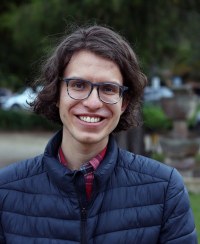
Krista Brune

Krista Brune
Associate Professor of Portuguese and Spanish

Curriculum Vitae

Biography

Krista Brune specializes in modern and contemporary Luso-Afro-Brazilian literature through the lens of translation, visual and popular cultures, and intellectual history. Her first book Creative Transformations: Travels and Translations of Brazil in the Americas (SUNY Press, 2020) analyzes key moments in the travels and translations of Brazilian artists and intellectuals from the 1870s to the present. She is now working on a book that situates Lisbon, Rio de Janeiro, São Paulo, and Luanda as global Lusophone cities. The project documents how contemporary writers and artists respond to legacies of colonialism and recent urban transformation that threaten to erase histories and displace communities. Another area of her research centers on Latin American popular music, film, and cultural policies. As a Fulbright grantee to Brazil in 2007, she studied the politics of popular Brazilian music in relation to the nueva canción and nueva trova. More recently, she has co-edited, with Natalia Brizuela, Listening to Others: Eduardo Coutinho’s Documentary Cinema (SUNY Press, May 2024), the first English-language volume dedicated to the Brazilian filmmaker.

She teaches undergraduate and graduate courses that place Brazil in a hemispheric or transatlantic framework, including Luso-Brazilian Cinema, Latin American Cosmopolitanisms, and Commodity Cultures. As a visiting professor at the Universidade de São Paulo in May 2019, she co-taught the graduate seminar “Tradução e política nas Américas.” She also organizes speakers’ series and cultural events related to the Portuguese program. In 2020 and 2021, she was a funded participant in Penn State’s Redesigning Modernities project. She was the Dorothy W. Gilpatrick University Endowed Fellow in the Humanities from July 2021 to June 2023. Currently, she is the director of the Global and International Studies program.

Recent Articles:

Pronouns:

  • She/her

Education

Ph.D., Hispanic Languages and Literatures (Luso-Brazilian track), University of California, Berkeley
M.A., Luso-Brazilian Literatures and Cultures, University of California, Berkeley
A.B., Spanish and Portuguese, Princeton University

Research Interests

Brazilian literature and culture, Global Lusophone Studies, Hemispheric American Studies, translation, intellectual history

Courses Regularly Taught

200 Level

2–3 Credits

Spring 2026 Semester

PORT 123 Portuguese for Romance-language Speakers
This course offers an overview of Brazilian Portuguese for students who have a good grasp (or are heritage or native speakers) of Spanish, French, Italian, or another Romance language. Students will practice listening, speaking, reading, and writing in Portuguese as they learn grammatical structures and vocabulary with an emphasis on differences between Portuguese and Spanish. While focusing on language acquisition, the class will also offer students insight into Brazilian culture via music, poetry, short stories, visual art, news articles, and film clips.

Recommended Preparation

Students should have a high level of proficiency in, or be native or heritage speakers of, a Romance language


Bachelor of Arts

World Language (All), World Language (12th Unit)


Exceeds 12th Unit of World Language


300 Level

1-9/maximum of 9 Credits

Spring 2026 Semester

PORT 497 Global Portuguese
This course offers students a deeper understanding of the global manifestations of the Portuguese language and its associated Luso-Afro-Brazilian cultures. The class traces transoceanic connections within the Portuguese-speaking world by discussing histories and aftermaths of colonialism and dictatorships, race and migration, linguistic diversity, cultural exchanges, and the concept of Lusofonia. We will examine poetry, short stories, music, film, and visual art in dialogue with news articles, historical sources, policy statements, and academic essays. This class will be conducted in Portuguese. Students must be able to complete readings, informal and formal written assignments, and in-class discussion and activities in Portuguese.

Bachelor of Arts

Humanities


Class Times

Mondays, Wednesdays, Fridays from 1:25 p.m.-2:15 p.m.


3 Credits

SPAN 597 Luso-Hispanic Urban Imaginaries
This seminar explores the literary and artistic representations of Latin American and Iberian cities from their origins as imperial metropoles and colonial capitals through their transformations with nineteenth- and twentieth-century urban reforms and continued exponential growth. This class focuses primarily on cultural representations of Madrid and Lisbon as the centers of empire; Buenos Aires, Havana, and Rio de Janeiro as Belle Époque capitals; and São Paulo and Mexico City as global megapolises. We will consider how literary and artistic works can serve as alternative archives that document the rhythms of daily life, render the city as palimpsest, and, in the process, protest gentrification and other rapid changes. Readings from urban studies, architecture, anthropology, history, and other interdisciplinary fields will complement our literary and cultural analysis. Our discussions will draw on theoretical and critical readings from writers such as Henri Lefebvre, David Harvey, Le Corbusier, Adrián Gorelik, and Teresa Caldeira, in dialogue with primary texts, including essays, poems, short stories, photographs, and films by, among others, João do Rio, Mário de Andrade, Jorge Luis Borges, Tina Modotti, Carolina Maria de Jesus, Carlos Monsivais, Mariana Enríquez, and Mónica de Miranda. Readings will be in Spanish, Portuguese, and English. Class discussion will be held in Spanish or English, depending on the preference of the class members.

3 Credits

SPAN 597 Commodity Cultures
This seminar examines the literary and cultural representations and repercussions of Latin America’s extractive economies. Letters, diaries, travelogues, and narratives from the colonial period through the nineteenth century crafted Latin America as a "marvelous possession" whose natural resources were to be controlled, extracted, and exploited for the benefits of elites. To explore how colonial, neocolonial, and neoliberal dynamics of extractive capitalism resonate within Latin American culture, this seminar will focus on commodities such as cotton, sugar, gold, coffee, water, and oil. At the end of the semester, we will move beyond these goods to consider culture itself as a commodity. Our discussions will draw on theoretical and critical readings from, among others, Héctor Hoyos, Macarena Gómez-Barris, Ericka Beckman, Charlotte Rogers, and George Yúdice, in dialogue with primary texts, including essays, novels, and films by Júlia Lopes de Almeida, Fernando Ortiz, Graciliano Ramos, Cristina Rivera Garza, Sebastião Salgado, and Lucrecia Martel.

3 Credits

SPAN 597 Latin American Cosmopolitanisms
This seminar explores theories and expressions of cosmopolitanism emerging from Latin America beginning in the mid-nineteenth century and continuing through the contemporary moment. The class will consider how understandings of cosmopolitanism have changed in recent decades as Bruce Robbins, Pheng Cheah, and Homi Bhabha, among others, have embarked on a project of "new cosmopolitanisms." By following a more nuanced comparative perspective, this course recognizes that cosmopolitanism is no longer the privilege of the elites, but rather an experience shared with the poor and others. Latin American scholars Silviano Santiago, Mariano Siskind, and Ignacio Sánchez-Prado invite us to think about cosmopolitanisms in relationship to peoples, languages, and cultures often relegated to the periphery of world literary and cultural systems. In reading their theoretical interventions alongside philosophical texts by Immanuel Kant, Martha Nussbaum, and K. Anthony Appiah and literary works by Brazilian and Spanish American writers, this seminar proposes an investigation into the meanings and expressions of Latin American cosmopolitanisms. The following questions will animate course readings and discussions: How does a study of cosmopolitanism contribute to our understanding of the place of Latin America and its writers in the world? How do Latin American writers exude a desire for the world, which Siskind considers constitutive of cosmopolitanism? To what extent do Latin American cosmopolitanisms vary over time, in response to global geopolitical, economic, and cultural developments?

Current Graduate Advisees

José Miguel Fonseca Fuentes Profile Image
Literature Representative to Faculty Meetings, SIPSGO
Ramsés Martínez Barquero Profile Image
Practice Talks Coordinator for Literature, SIPSGO

Publications

Listening to Others: Eduardo Coutinho’s Documentary Cinema

Editor(s):

Publication Date:

About the Book

Listening to Others is the first English-language volume dedicated solely to the vast corpus of the preeminent Brazilian director, Eduardo Coutinho (1933–2014). From his early work in the 1960s to his last, posthumous film in 2015, Coutinho transformed documentary filmmaking in Brazil and beyond. Described as an informal linguist and savage anthropologist, Coutinho filmed encounters with people different from himself that foregrounded their voices and his role as an attentive listener, creating a “cinema of listening.” This collection brings together leading scholars of film, literature, visual culture, Brazilian studies, and Latin American studies, from the United States and Latin America, to examine both Coutinho’s masterpieces and less studied films. Using a range of approaches, the contributors invite new ways of understanding the documentarian’s trajectory and importance as his work transformed in response to dictatorship, democratization, and other political, social, and technological changes over the course of five decades. The volume also features original translations of a selection of Coutinho’s writings and key texts by Brazilian critics to offer a historical perspective on his filmmaking and its reception.
Read More
Creative Transformations: Travels and Translations of Brazil in the Americas

Creative Transformations: Travels and Translations of Brazil in the Americas

Author(s):

Publication Date:

About the Book

In Creative Transformations, Krista Brune brings together Brazilian fiction, film, journalism, essays, and correspondence from the late nineteenth to the early twenty-first centuries. Drawing attention to the travels of Brazilian artists and intellectuals to the United States and other parts of the Americas, Brune argues that experiences of displacement have had a significant influence on their work. Across Brazilian literary and cultural history, translation becomes a way of navigating and representing the resulting encounters between languages, interactions with Spanish Americans, and negotiations of complex identities. While Creative Transformations engages extensively with theories of translation from different national and disciplinary contexts, it also constructs a vision of translation uniquely attuned to the place of Brazil in the Americas. Brune reveals the hemispheric underpinnings of works by renowned Brazilian writers such as Machado de Assis, Sousândrade, Mário de Andrade, Silviano Santiago, and Adriana Lisboa. In the process, she rethinks the dynamics between cosmopolitan and national desires and between center and periphery in global literary markets.
Read More
Krista Brune Profile Image